
Criminal Court Cases in White County
White County belongs to Illinois's Second Judicial Circuit. Its Circuit Court has original jurisdiction over felony, misdemeanor, DUI, traffic, ordinance, juvenile, and other filed matters. The White County State's Attorney prosecutes each local criminal level, but the Circuit Clerk is the record custodian and public copy counter. Illinois has no separate municipal-court tier for Carmi, Norris City, or the White County part of Grayville.
The court file begins when a complaint, information, or indictment is filed. It can then record counsel appearances, pleas, motions, settings, judgment, sentence, costs, and later proceedings. A police report remains with the agency that created it, while the jail keeps booking data. Those records may describe the same event, but they are not parts of one universal file.
Searching White County Cases on Judici
Judici is White County's official court-partner portal for basic public case information and Plea & Pay. Select White County first. An exact case number is the strongest key; otherwise use surname and first name, then distinguish results with non-sensitive public case facts. Open the docket and read every count and the newest event.
| Search field | Best use |
|---|---|
| Case number | Direct route to one White County file |
| Last name | Broad party search; spelling matters |
| First name | Narrows common surnames |
| County selection | Prevents a result from another Illinois court |
The White County search screen illustrates the county routing and available controls.
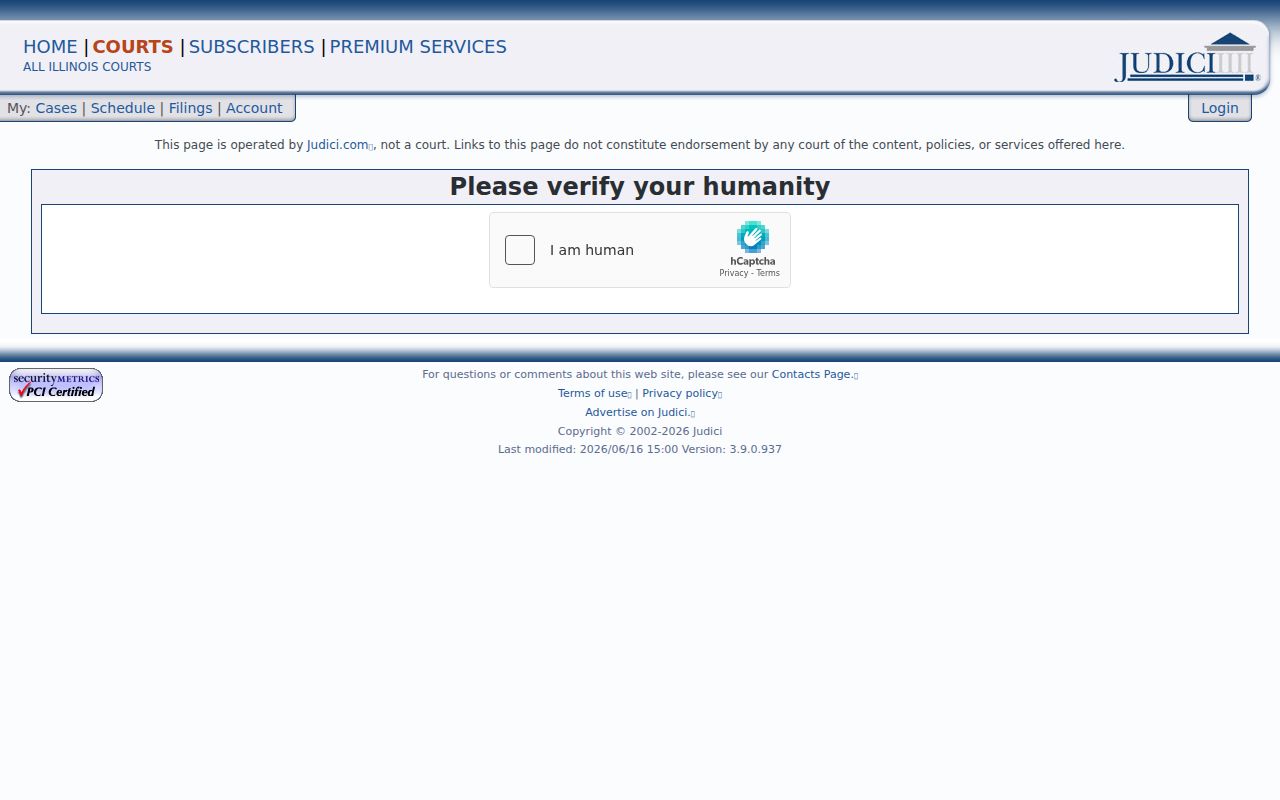
The portal view is a starting point, while the clerk remains the authority for missing images, archived entries, public orders, and certified White County court records.
White County Case Record Searches
Use a channel that matches the record needed. Online docket data is quick, but it is not the same as the complete paper or electronic court file.
- Select White County on Judici and search the exact case number.
- If the number is unknown, search the party name and compare filing date, case type, and status.
- Open each count and follow events through the latest disposition rather than stopping at the original charge.
- Call the Circuit Clerk at 618-382-2321 for an archived matter, omitted image, certified copy, or unclear docket.
- Visit the clerk at 301 E. Main Street in Carmi for inspection or formal copies; confirm current fees first.
Note: Grayville spans two counties, so confirm whether a Grayville case was filed in White County or Edwards County.
Certified White County Court Files
The White County Circuit Clerk works at the courthouse counter Monday through Friday, including lunch. Ask for a plain copy when an informational copy is enough, or state that certification is required. Bring the exact case number, party name, and approximate year. Current copy and certification costs should be confirmed before ordering because the research found no universal local fee schedule.
White County Circuit Clerk
301 E. Main St., PO Box 310
Carmi, IL 62821
618-382-2321
Monday-Friday, 8:00 a.m.-4:00 p.m.
Kelly L. Fulkerson's office also handles case dates, fines, appeal records, and certified court records. The clerk, not the prosecutor or sheriff, should resolve a question about what appears in a filed White County case.
An appeal does not transfer the usefulness of the local file. The White County clerk prepares and preserves the certified appeal record, while the Fifth District Appellate Court handles the appellate proceeding. Start at the circuit clerk when the goal is a certified copy of the trial record, an order entered below, or confirmation that a notice of appeal was filed. Use the Illinois Courts appellate channel for the later appellate docket. This split also matters after sentence: probation files are held by the Second Probation District and are not open in the same manner as the court docket. Ask for the filed sentencing order and public docket entries at the clerk rather than seeking a probation supervision file as a substitute.
What a Criminal Case File Contains
A White County case page groups facts by case, party, count, event, hearing, and financial entry. Scanned pleadings are less consistently public than docket metadata.
| Case header | County, case number, title, filing date, type, and status |
|---|---|
| Parties | State of Illinois, defendant, and public counsel entries |
| Counts | Offense text, statutory reference, class, and count outcome |
| Docket events | Filing, appearances, pleas, motions, continuances, judgment, and sentence |
| Hearings | Date, time, courtroom, judge, and hearing type when posted |
| Financial | Assessments, costs, payments, and balance where enabled |
| Documents | Metadata or images, subject to access, subscription, or restriction |
For the broader distinction between a booking and a filed case, use the White County arrest search page.
Reading White County Case Types
Case-type letters help sort White County criminal records before the reader reaches the count details. CF identifies felony cases, CM marks criminal misdemeanors, DT covers DUI matters, TR covers traffic cases, and OV is commonly used for ordinance violations. The label is a filing category, not a verdict.
- Disposition
- The recorded outcome of a count or case.
- Dismissed
- A charge ended without a conviction on that count.
- Closed
- The court treats the matter as concluded, though later filings may still occur.
- Supervision
- An Illinois outcome that must be read with its terms and completion entry.
A multi-count White County file can have a different result for each count. Read the judgment and latest entry rather than treating “closed” as a synonym for guilty.
Criminal Case Stages in White County
White County criminal cases move through a defined court sequence, though dismissal or a plea can end the case before trial.
An officer may first arrest or seek a warrant. A prompt first appearance and release or detention review follows. The State's Attorney then files or continues the charge, or obtains an indictment. Arraignment records a plea; discovery, motions, and settings follow. Since Illinois's 2023 Pretrial Fairness Act changes, new cases use release conditions and detention hearings rather than the former money-bail system. Older White County dockets may still show historical bond terms.
The county's Plea & Pay instructions apply only to eligible cases and include deadlines and transaction details.

Eligibility must be checked in the actual case; the payment route does not replace the docket or a court order.
White County Courtrooms and Remote Access
Criminal and traffic hearings are assigned to Courtroom A or B on the courthouse's second floor. Cell phones are not allowed in the courtroom and should be left secured elsewhere. Zoom is not automatic: the presiding judge must approve a motion filed at least one week before the hearing. Those rules matter when a docket search leads to an in-person file inspection or hearing.
The county publishes practical notices alongside its courthouse information.
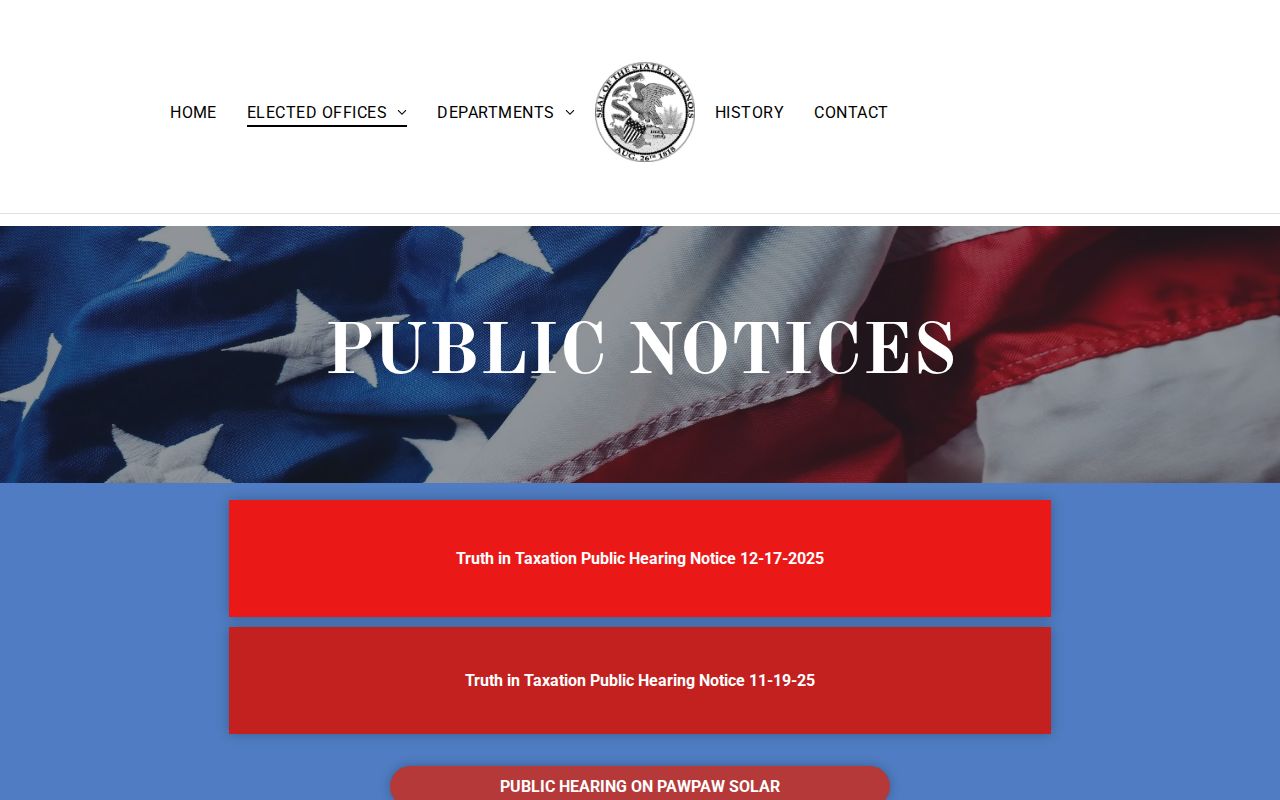
The notice page helps readers plan a courthouse visit, while the clerk can confirm the courtroom and current setting.
Judici Dockets and Court Documents
A Judici docket is an event index. It may show that a complaint, motion, order, or judgment was filed without providing a free image of that document. Some document functions may be unavailable, restricted, premium, or payment-based. Basic case information is still useful for finding the correct White County file and its latest status.
Read a White County docket from oldest to newest, but give the last valid court action the most weight. A complaint states what was filed at the start. Later amended counts, plea entries, dismissal orders, judgments, or sentencing orders can change the meaning of that first line. Financial balances also require care: an assessment and a payment entry describe the account, not whether each count ended in conviction. When two events seem to conflict, note their dates and ask the clerk for the underlying public order. That approach is more reliable than guessing from an abbreviated event label.
The main Judici interface shows how participating counties are selected.
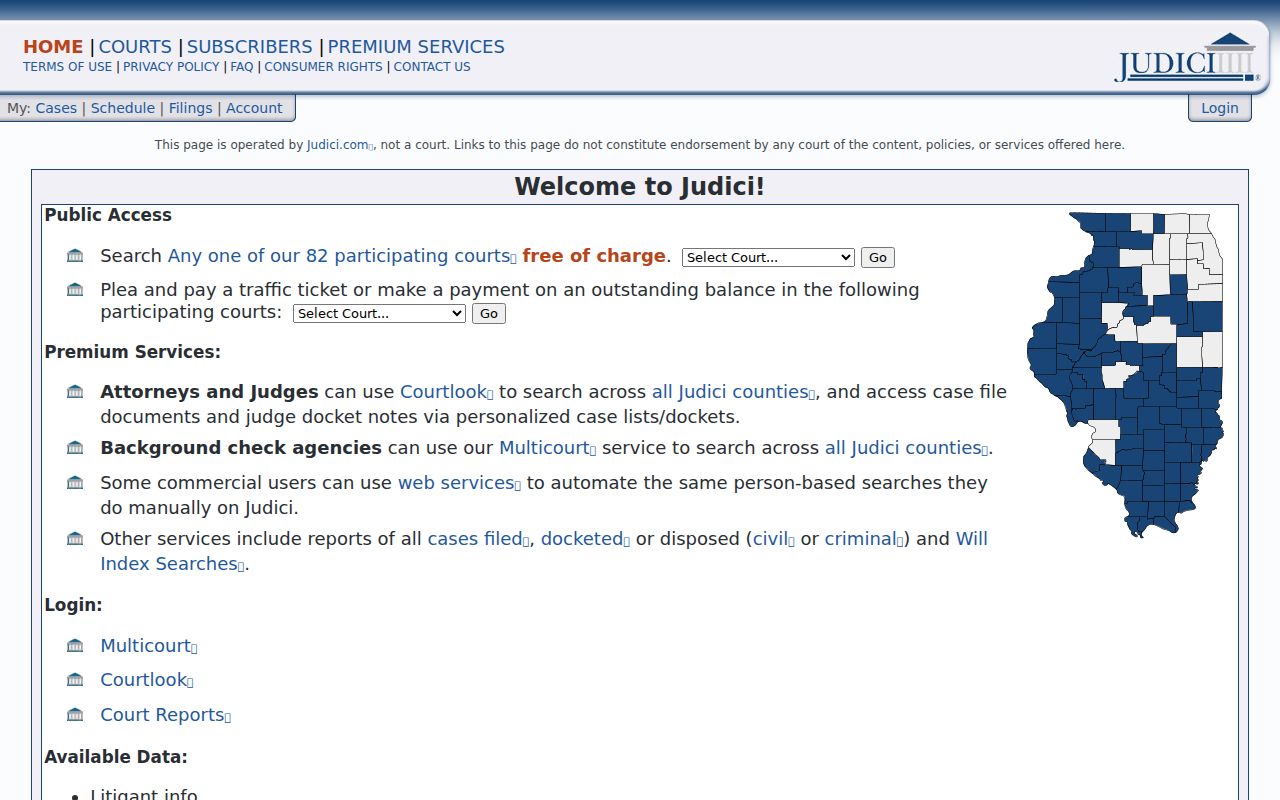
When the screen lists metadata but no pleading image, request the document from the White County Circuit Clerk instead of assuming it does not exist.
Access Rules for Case Records
Illinois law generally supports access to court records, and circuit clerks maintain and furnish copies under 705 ILCS 105. Access is not absolute. Juvenile matters, sealed or expunged cases, protected victim or minor facts, private identifiers, impounded files, and confidential reports may be hidden or redacted.
An absent online result can mean the spelling, county, or case number is wrong; the matter is old; images are offline; or legal restrictions apply. Ask the clerk to check before drawing a conclusion. The office may explain whether a public copy exists but cannot disclose material a statute or order keeps confidential.
The clerk's official page shows its case-view and office services.
The office channel is the final check when public portal access does not answer a White County court-record question.